
Epoxy Garage Flooring
in Lebanon, MO
Careful prep and the right coating system give a garage floor far more resistance to everyday wear than plain concrete can offer.
Your Garage Should Feel Like Part of Your Home
A garage slab is built to carry a load, and looks were never part of the plan. Ordinary use chips away at it: a slow oil leak spreads a dark patch, coolant leaves a ring, tires coming in from the road mark the surface, and a dropped socket wrench takes out a small chunk. With no protective layer on top, all of it stays and stacks up.
Concrete behaves like a hard sponge. Whatever reaches it begins working its way in, and even a spill you catch fast can leave a ghost of itself behind. The slab sheds a fine gray grit, too, which ends up on bikes, shelving, lawn equipment and anything stored near floor level.
A gallon of floor paint from the hardware store looks like an easy answer, yet a finish that lasts needs more than a roller pushed across bare concrete. If the slab is not ground, the coating has nothing rough to bond to. Vehicle weight, swings in temperature and hot tires pulling in after a drive all test that bond, often sooner than the paint can promises.

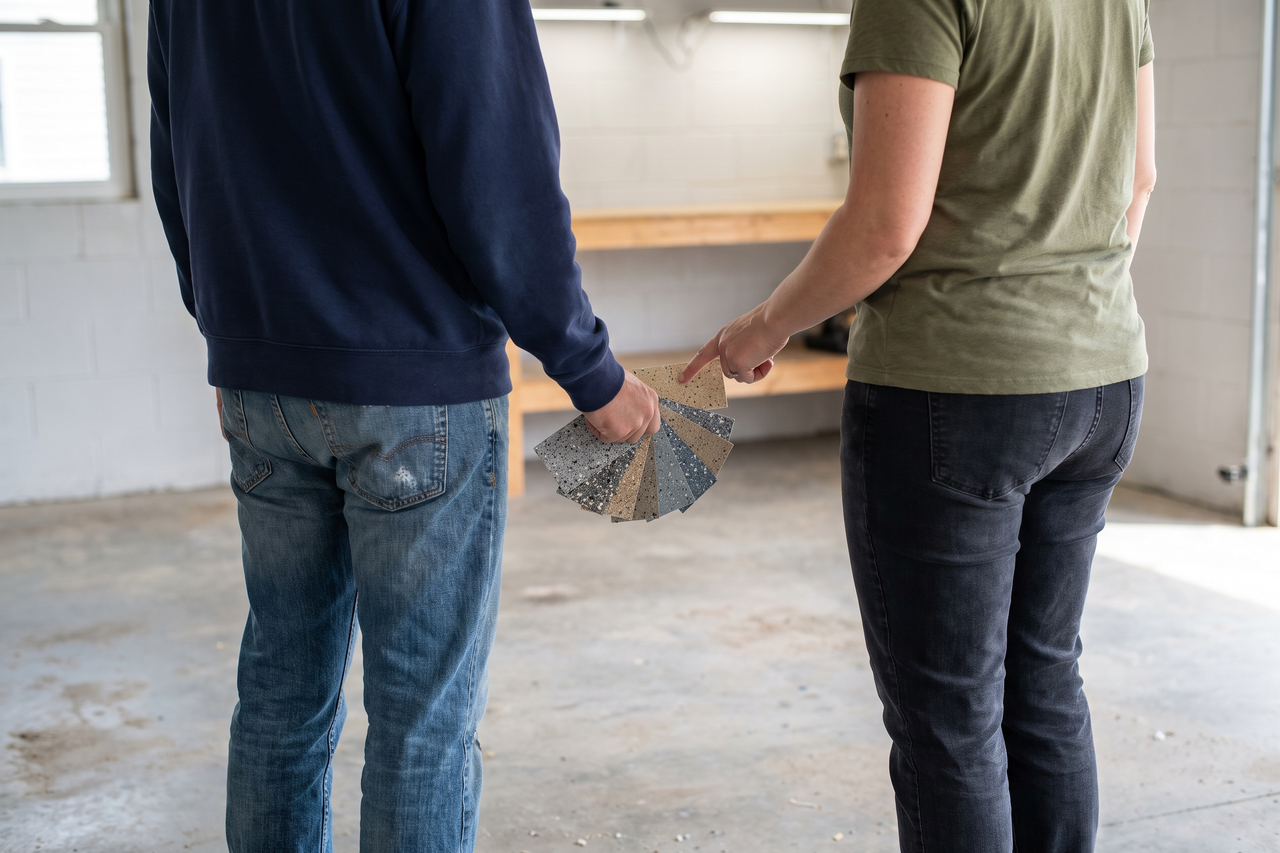
You Don't Have to Know Which Garage Floor Coating Is Right
Color and texture are only the visible part of the difference between garage coatings. An oil-soaked slab under an old work truck, a floor with surface cracks and a bay that heats up in strong sun each need a different approach than a clean, newer slab that stays in the shade. Choosing a product first and studying the concrete second is how floors end up being redone.
Before suggesting anything, your installer takes a close look at the slab: checking moisture, marking the damage that has to be fixed and watching for old sealers that would get in the way of a good bond. That visit usually trims the list of options considerably. Flake systems are a strong choice for busy floors that need grip and a textured look. Metallic finishes make sense when you want the floor itself to be the feature.
Your Garage. Your Style. Three Simple Steps.
Three plain steps take a garage from bare concrete to a finished floor.
01
Show Us Your Garage
Share how you use the garage, the current condition of the floor, and the finish you would like to see when it is done.
02
Choose Your Floor
The flooring professional checks the concrete in person, walks through which coatings that slab can support, and builds any quote around what the inspection finds, where the project is a fit.
03
Come Home to a Finished Garage
Your installer prepares the slab and applies the coating, then explains what to expect while it cures before you park on it.
Ready to See What Your Garage Could Become?
Tell us about your garage floor and the finish you are picturing to request a customized quote.
The Wrong Garage Floor Can Cost You Twice
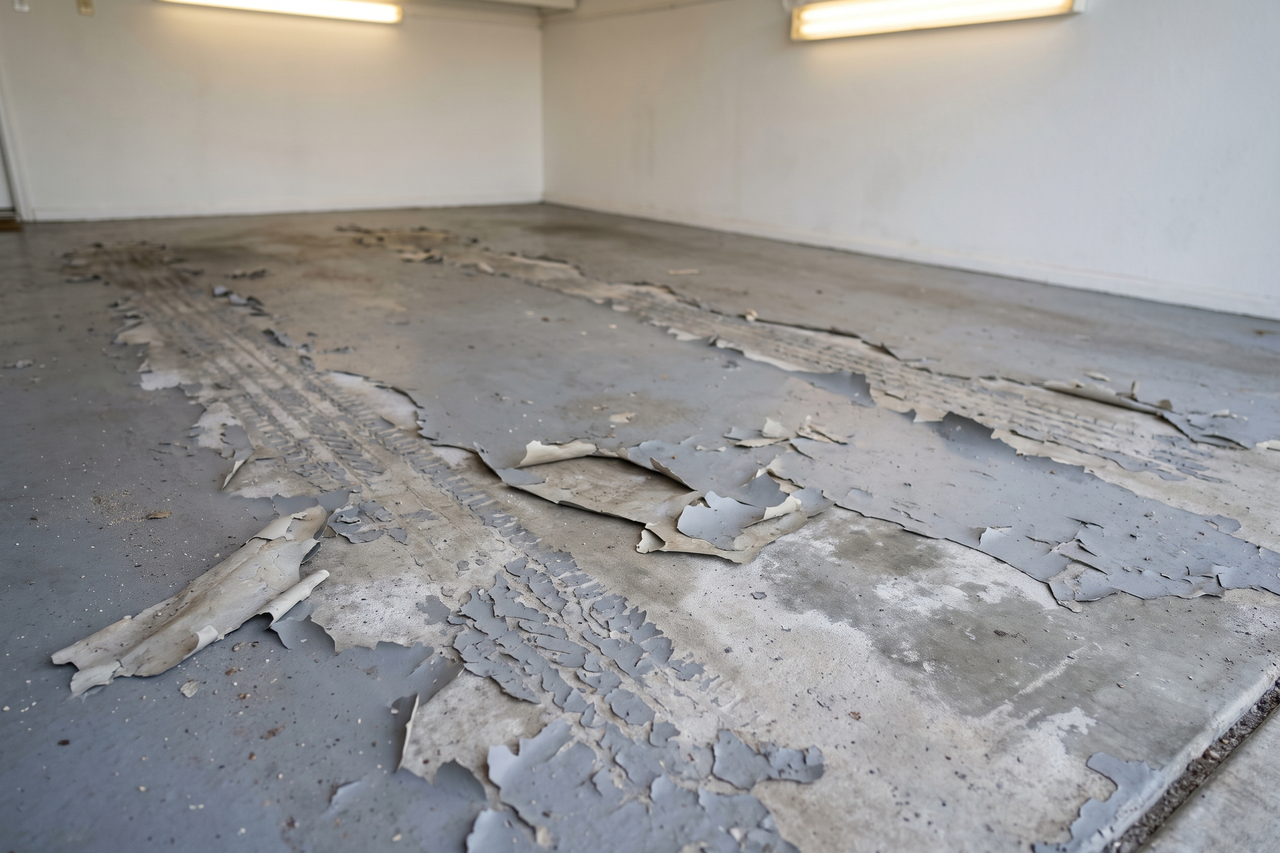
A failed garage coating usually had its problem baked in before application. Moisture that nobody checked, grease left on the slab, a product picked without looking at the concrete and a coat rolled out while the air was too cold or damp can each undermine the bond. Peeling where tires roll and lifting under heavy point loads are what tends to follow when those are ignored.
A fresh coat on top of a failing one only hides the trouble. Anything loose or delaminated has to be taken off until clean, sound concrete is exposed, which a new system needs in order to bond, and that removal is a separate job that carries its own labor and cost.
Careful prep, plus a coating chosen for the concrete actually in your garage, gives the floor a much better shot at lasting. Trimming steps to save on the initial price is one of the more common reasons a garage floor needs work again far earlier than anyone hoped.
A Garage You're Proud to Come Home To
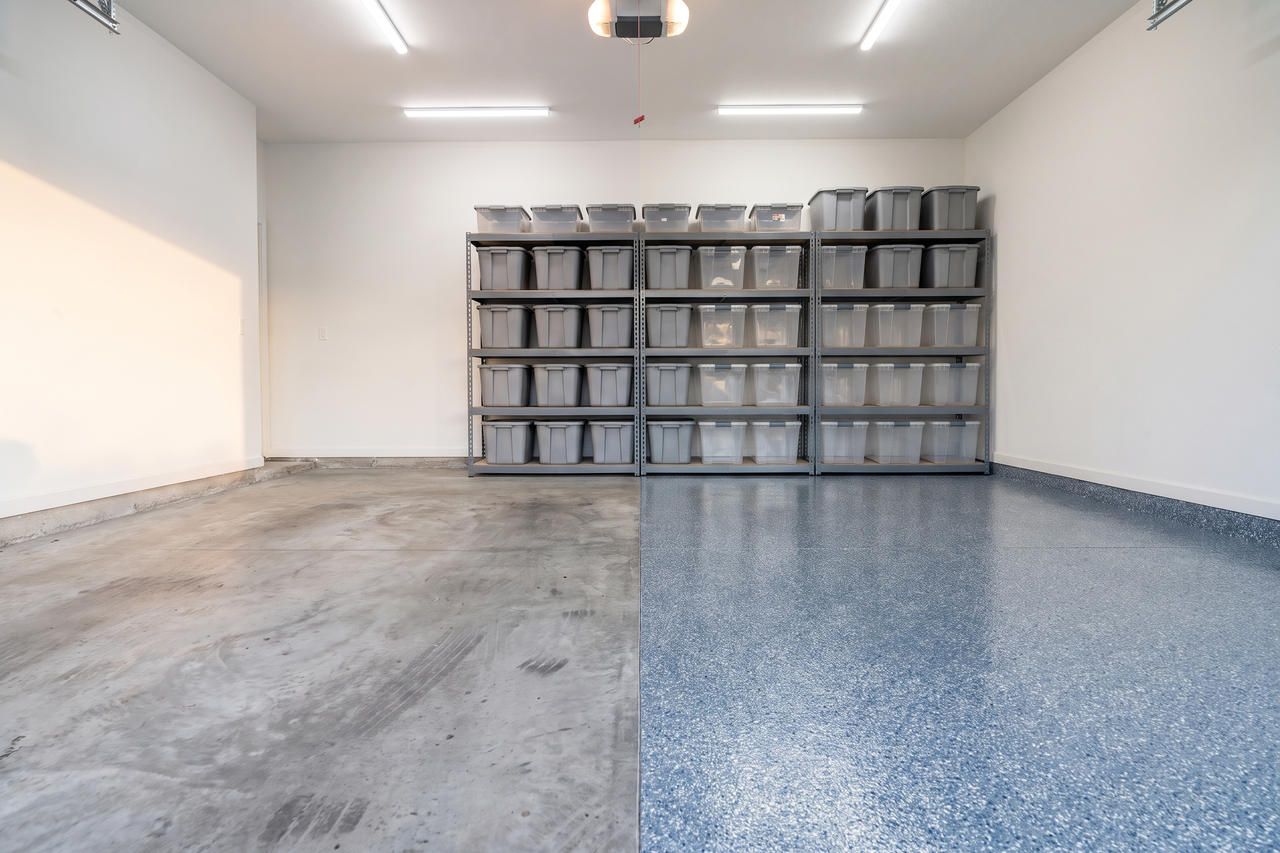
Once the coating is down, the garage simply works better. Drips that used to leave a permanent mark come off with a paper towel. Far less dust lifts off the slab. Grit, gravel and scraping boots have a harder time wearing the sealed surface than they ever did on plain concrete.
The gain is practical as much as visual. Parking, storing gear and working on hobby projects all happen on a floor that cooperates instead of creating more cleanup.
Think through what your garage really handles: what lives there, what gets built or repaired there and how many people walk through it. Those habits are the best guide to the coating and finish that make sense.
What Does Garage Floor Coating Cost?
Garage coating prices span a broad range. Size is one factor, but slab condition, the amount of prep, the product and the finish matter just as much. A solid color system, a flake system and a metallic system each call for different materials and different labor.
The figure to trust is the one built around your own garage. A quote shaped by how your slab looks up close and by the finish you have picked is the right number to plan with.
Common Garage Floor Questions
Can a professionally applied garage coating stand up to hot tires?
Tire heat is one of the harder tests a garage finish faces, and paint rolled onto unprepared concrete is prone to releasing under it. A professional system bonded to a properly ground slab is made to handle that stress far more dependably. Results depend on both the product and the prep, so your installer weighs both on site before recommending a system.
How does prep deal with cracks and oil stains?
Both are handled in prep, ahead of the coating. Cracks and control joints get filled, and oil-stained areas are cleaned with a degreaser before grinding starts. If the oil has worked deep into the concrete, the flooring professional judges what that slab can realistically support and gives you a straight answer about the options.
How much traction does a coated garage floor have when wet?
Smooth, shiny floors lose some traction when they are wet, so grip deserves a place in the planning conversation. A flake broadcast gives the whole surface a bit of texture. For spots where water gathers, such as the apron by the overhead door or around a drain, the topcoat can include an anti-slip additive for more bite underfoot.
When is the garage ready for cars and foot traffic again after coating?
The answer depends on the coating system and the conditions it cures in, including temperature and humidity. Your installer goes over what to expect before the job begins, so you can plan to keep vehicles off the floor as needed.