
Epoxy Basement Flooring
in Lebanon, MO
Sealing and coating the basement floor gives the room a clean, finished base for whatever you plan to do with it.
Your Basement Shouldn't Feel Unfinished From the Floor Up
A bare concrete floor quietly tells everyone the basement is still on the to-do list. Whatever the plan for the space, whether that means lifting weights, folding laundry, a desk for remote work or a bench for projects, the gray slab is what people register at the bottom of the stairs, and it makes the whole room feel temporary.
Keeping uncoated basement concrete clean is an uphill job. A film of dust rises from the surface and settles on boxes, shelves and furniture. Anything spilled sinks in before you can grab a towel and leaves a mark mopping cannot budge. Sweep as often as you like and the porous slab still does not feel truly clean.
Flooring that behaves well upstairs often runs into trouble on a below-grade slab. Concrete poured against the ground deals with moisture in ways the upper floors of a house do not. A coating designed for concrete works with that below-grade reality rather than against it, giving the basement a surface built for what the slab goes through.
The Right Basement Floor Starts With the Concrete Underneath
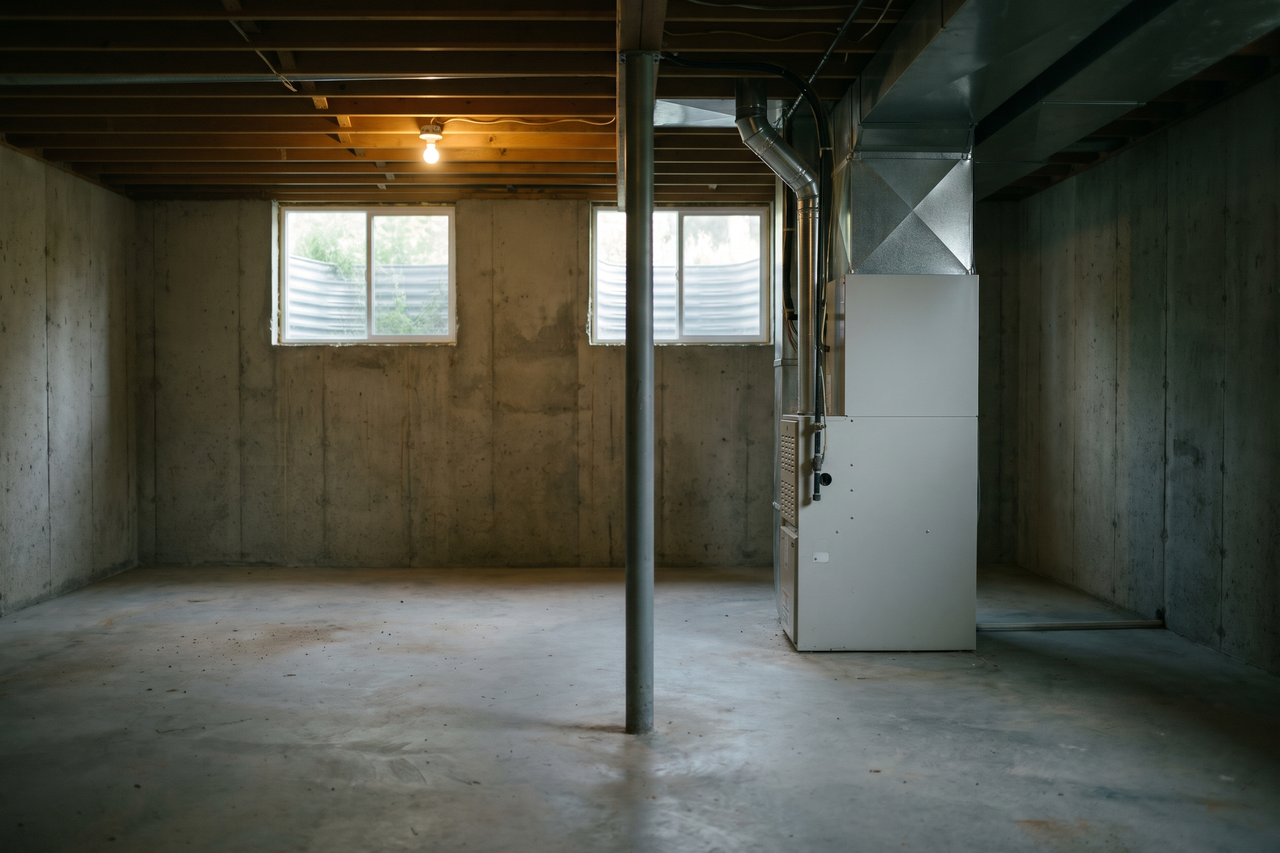
Basement slabs have a longer list of unknowns than most floors. Vapor working upward through the concrete, pressure from the soil around the foundation, old glue or sealer, cracks and past patch jobs all affect the amount of prep required before any coating can grip.
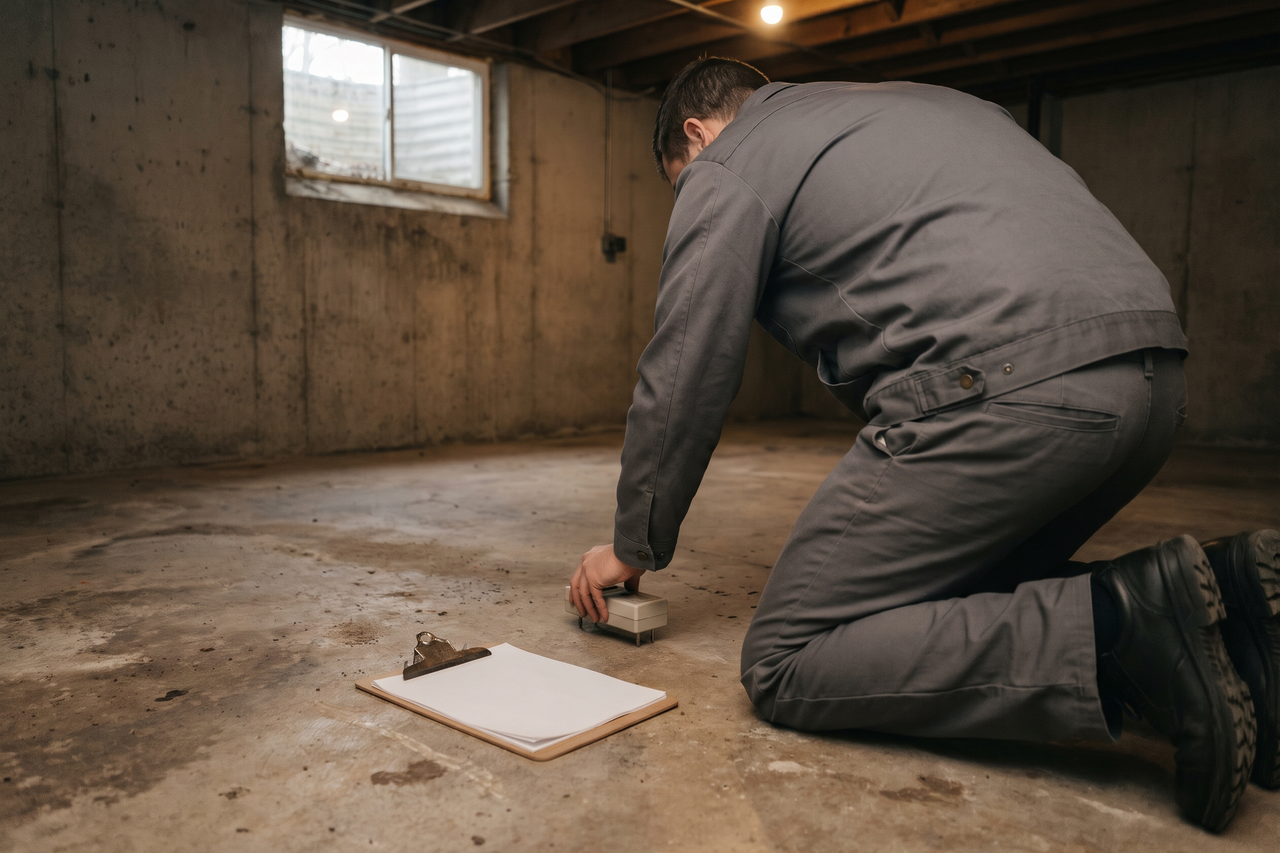
Your installer checks the concrete before recommending a system, looking for signs of moisture and judging how sound the slab is overall. Skip that step below grade and nobody really knows what the moisture is doing, and vapor rising from underneath can create trouble that was not visible at the start.
Once you know what the slab is dealing with, the finish is the easy part. Solid color keeps things simple and even. Flake adds texture and footing for floors that get a lot of use. Metallic epoxy gives a deep, glossy, almost liquid look that paint cannot copy.
A Better Basement Floor Is Easier Than You Think
Most homeowners find the process easier to manage than they expected going in.
01
Tell Us About Your Basement
Describe your plans for the room, the current state of the floor, and any history of moisture or an earlier coating on the slab.
02
Choose the Right Floor
With the slab inspected in person, the flooring professional lays out which systems this concrete can handle and recommends a finish suited to the concrete as well as to what you want the room to become.
03
Transform the Space
Your installer prepares the surface, applies the coating, explains what the floor needs while it cures and then gives the finished room back to you.
Ready to Make Your Basement Feel Finished?
Tell us what the basement looks like now and what you would like it to be used for. With a few basics about the slab and your ideas for the room, you can request a customized basement flooring estimate.
Don't Turn Your Basement Floor Into a Project You Have to Do Twice
The causes behind a failed basement coating are usually in place before installation starts. Sealer or adhesive left on the slab, concrete that skipped grinding and moisture no one measured come up again and again, and each of them is sitting there before the first coat is rolled out.
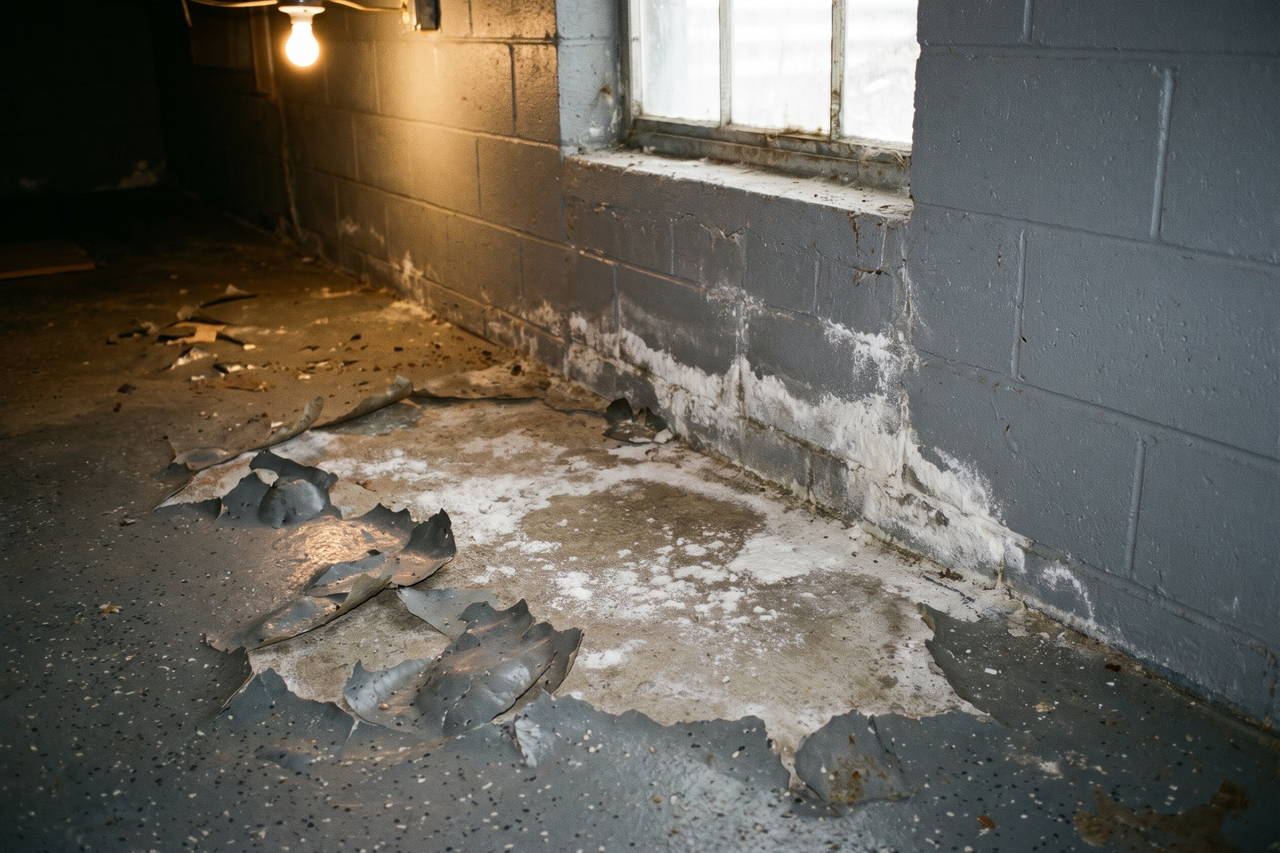
Below-grade concrete faces moisture conditions upper floors seldom encounter. Leave vapor movement and soil pressure unassessed, and they can push the coating loose from beneath, showing up as bubbles, peeled edges and hollow-sounding patches in areas that seemed solid at first. Low-bid jobs tend to skip moisture testing, and the damage tends to surface after the installer has packed up.
Grinding, crack repairs and moisture checks done before the coating goes on give the floor a fair opportunity to perform well. Skip them and the fix frequently means removing the failed coating entirely and starting again from bare concrete, an expense well beyond what thorough prep would have run.
A Floor That Changes How Your Basement Feels
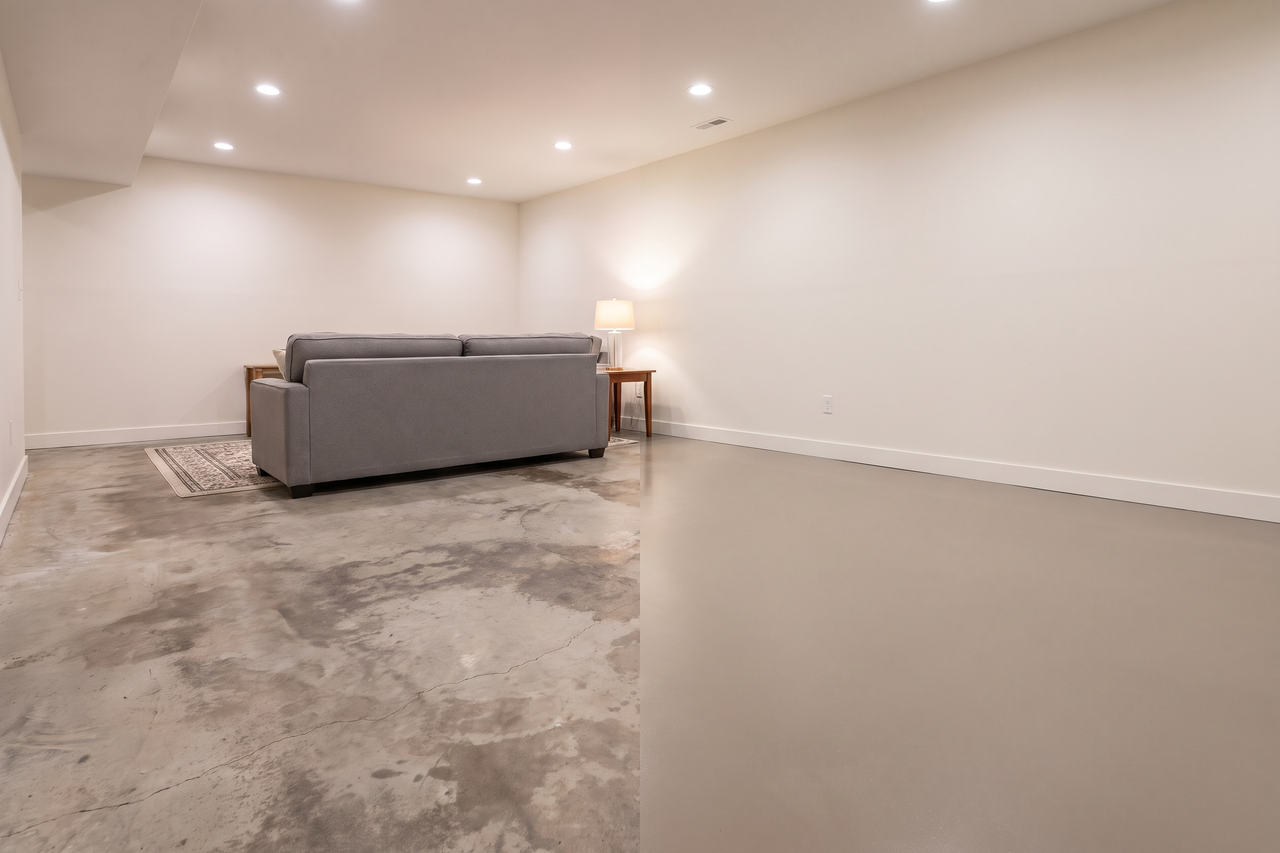
Coating the floor changes the mood of a basement more than most people expect. Light from the ceiling fixtures reflects off the smooth surface instead of disappearing into gray concrete, so the room looks roomier and brighter. Dust and dirt come up with a broom, and spills wait on top for a towel.
It pays off practically, too. The level that used to hold overflow boxes and holiday decorations becomes a place people head to on purpose. In many homes, the floor is what decides whether the basement is storage or living space.
What a basement becomes often comes down to the attention its floor received. Once the surface is sealed and finished, the room reads as part of the house, and people tend to respect it accordingly.
What Does Epoxy Basement Flooring Cost?
What a basement coating costs comes down to a handful of variables: the square footage, what the inspection reveals about the slab and its moisture, whether old glue or coatings need to be removed, how much crack repair is involved and the system and finish you settle on.
Rough price ranges do not tell you much for a basement, because the slab sets the real cost. An estimate based on what your floor actually shows, combined with what you want the room to do, is the number to budget against.
Common Questions About Epoxy Basement Flooring
Can a damp basement slab still take a coating?
It hinges on how the moisture presents itself and what the readings show; those answers come first, ahead of any system choice. Certain slabs can accept a primer built to tolerate moisture or an added vapor barrier coat, while others need the source dealt with before a coating is a sensible next step. Your installer looks at what the concrete reveals and explains which routes are realistic and what conditions come with each.
Can a coating keep water out of the basement?
No. A coating protects the top of the slab; it does nothing about water coming through foundation walls, joints or poor drainage outside, and each of those needs its own repair. Laying a coating over an active leak is unlikely to keep its bond and does not take the place of fixing what is causing it.
Do old adhesives or earlier coatings have to be stripped first?
Usually. Old coatings, glue and leftover residue stand between the new system and the bare concrete it needs to bond with, so coating over them weakens the floor from the start. How much removal is involved is something the flooring professional decides after seeing what the slab needs for the system you choose.
Will a coated basement floor feel any different underfoot?
Underneath, it is still concrete, so the floor stays firm and roughly as cool or warm as the room around it. What you notice is the surface: the gritty, dusty feel gives way to something smooth and sealed. Rugs and mats can go down on it the same as on any other hard floor.
What finishes suit a basement floor best?
Basement floors usually land on one of three finishes. Solid color is clean, consistent and easy to keep up. Flake brings texture and does a good job of hiding the scuffs of ordinary use. Metallic creates a rich, swirling look that stands apart from other flooring. The best pick comes down to what the room is really for and the style you like.