
Commercial Epoxy Flooring
in Lebanon, MO
A coating system selected for the realities of your business floor: how much traffic crosses it, what gets spilled on it and the conditions it needs to perform in.
Your Floors Should Work as Hard as Your Business Does
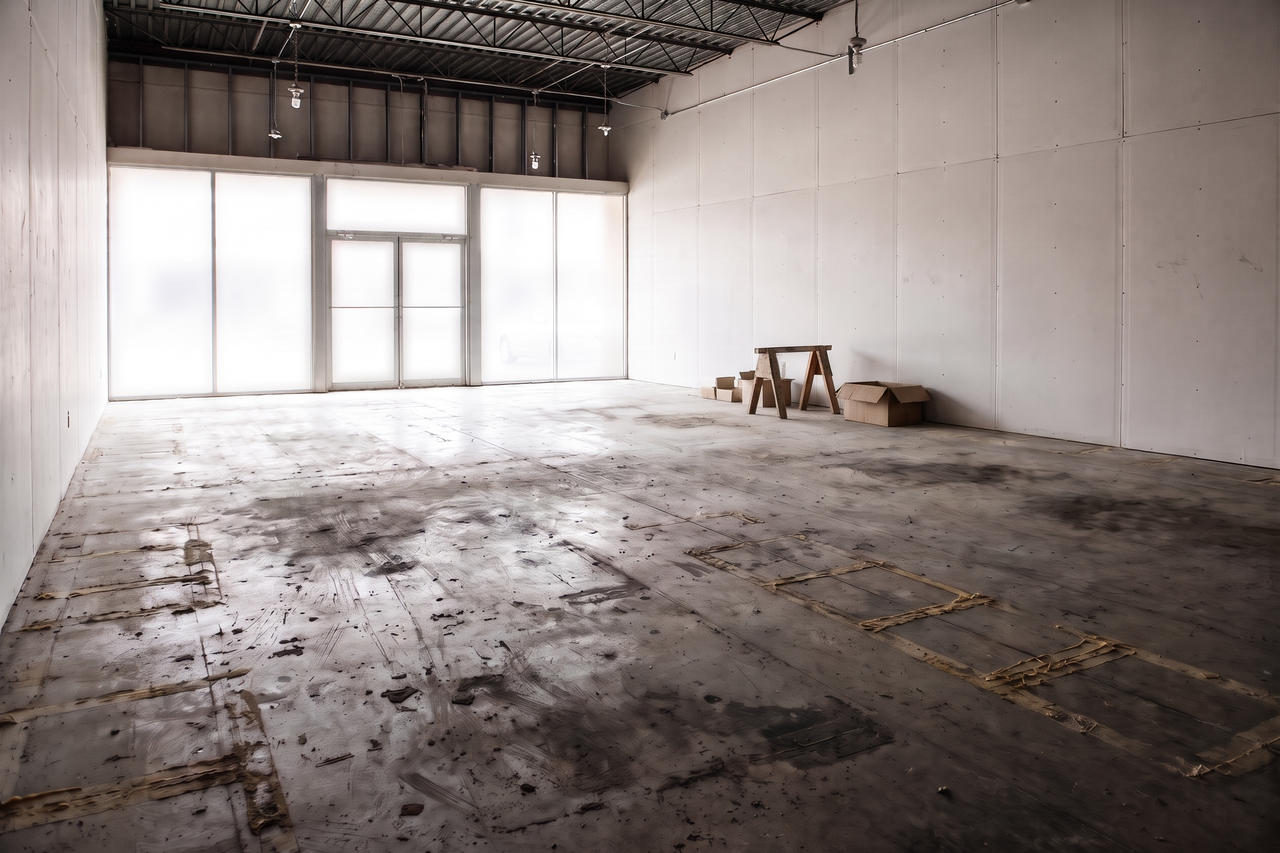
A business floor takes the same punishment in the same places, over and over. The front door, the checkout and the main aisle carry a constant parade of shoes, carts and dollies, and equipment rolls along identical routes until those paths wear thin. Unsealed concrete under that kind of traffic soaks up every spill along the way and gradually breaks down.
People judge a business before they get to the counter. Grimy traffic lanes, stained concrete near the register and chipped patches at the entrance send a message even when no one is consciously looking down. Customers pick up on it whether you want them to or not.
Raw concrete in a busy space also gets harder to clean as wear accumulates. Tiny cracks and rough spots hold onto grit that a mop slides right past. Staff end up working harder on the floor and getting less out of the effort.
The Right Floor Starts With Understanding Your Space
No two commercial floors are asked to do quite the same thing. Think of an auto repair bay, a clinic hallway, a boutique and the prep line of a restaurant kitchen. Each sees its own combination of traffic, cleaning chemicals, spills and wash routines, and the appearance of the floor matters more in some of those places than others.
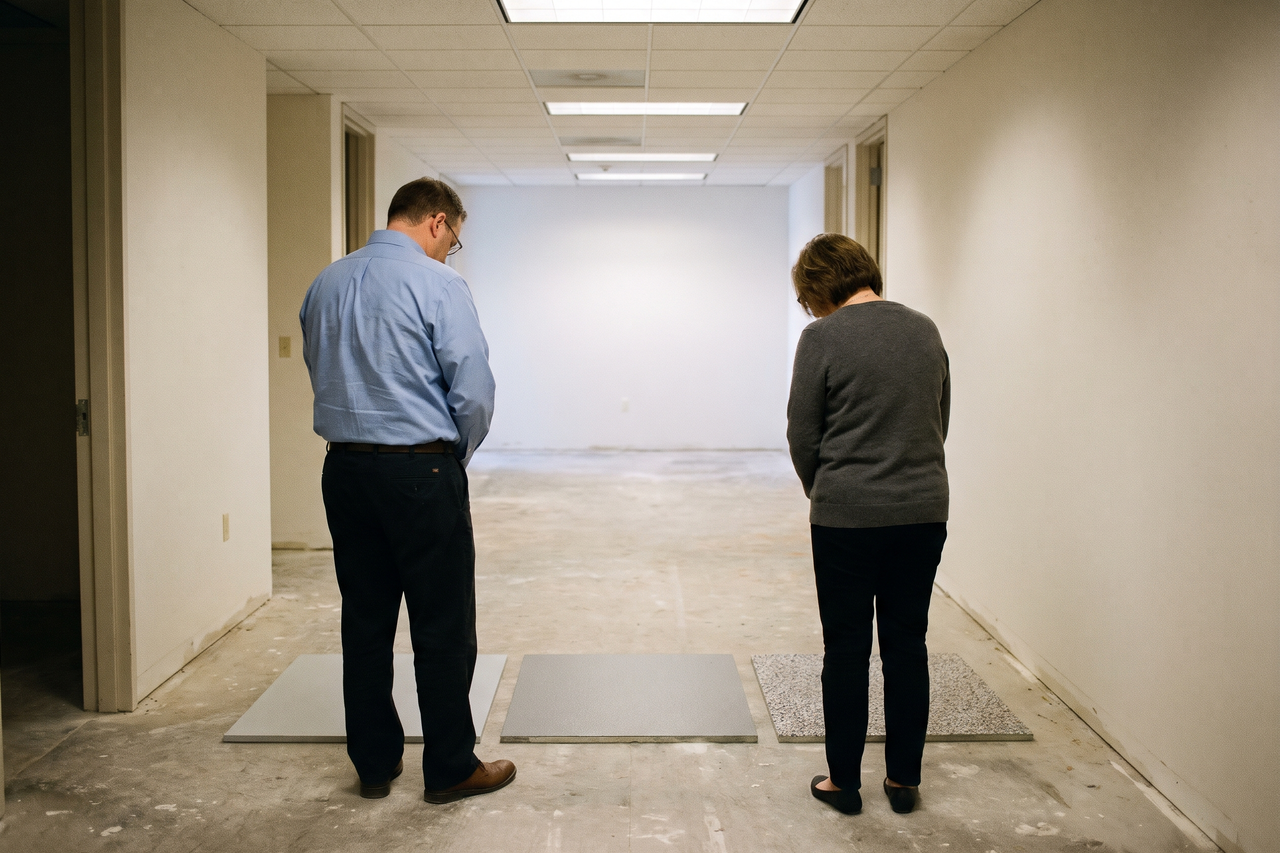
The first job for the flooring professional is understanding a typical workday on that floor: the loads and kinds of traffic it carries, what cleaning products and chemicals it sees routinely, how visible it is to customers and whether any access limits affect how the job is planned. The coating recommendation is built from those answers instead of a stock default.
The range of commercial systems is wide. Solid color suits service corridors and back rooms where function comes first. Flake systems add texture and a bit of visual character. Metallic finishes belong in sales areas and client spaces where the floor helps set the mood.
A Commercial Flooring Project Without the Guesswork
From the first conversation to the final coat, a commercial project tends to move through a clear series of stages. Here is the usual order.
01
Tell Us About Your Property
Explain what the business does, how the floor gets used during regular operation, the condition the concrete is in and any access limitations your installer would need to plan around.
02
Get a Flooring Plan
The flooring professional walks the property, inspects the concrete, sees how the space operates and maps out the prep and coating that particular floor needs for the way it is used.
03
Transform Your Space
Your installer works through surface prep and then the coating itself in an order you agree on beforehand. Any staging or phasing of the work depends on the project and the contractor, along with the size of the floor, the system selected and whatever the inspection reveals.
Planning a Commercial Flooring Project?
Share what the space is and what its floor has to put up with to request a commercial flooring estimate. Photos or rough measurements of the current floor are useful to add if you have them handy.
The Wrong Floor Can Become an Expensive Problem
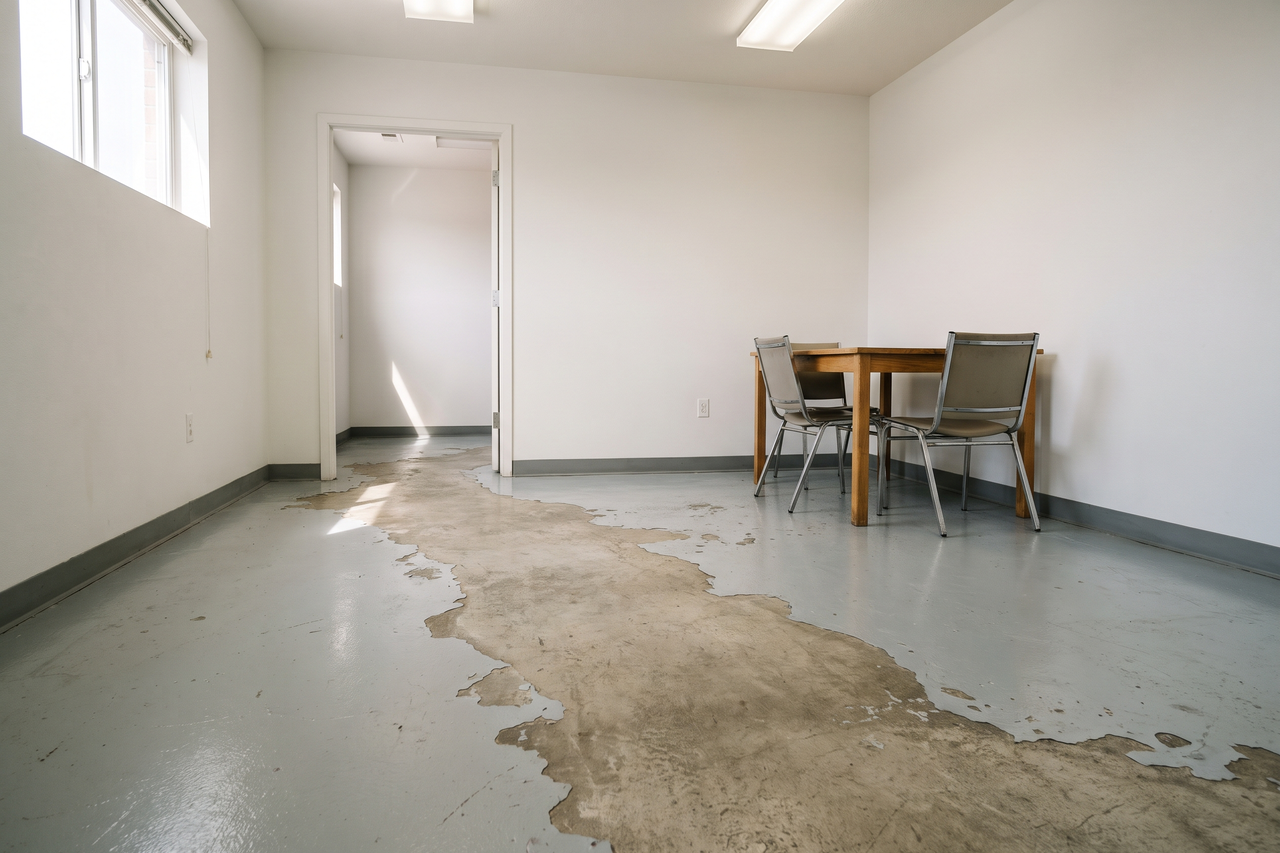
Think of a busy corridor or back-of-house area where the coating has started lifting along its seams. It reads as a cosmetic issue at first, but it does not stay that way. Curled edges catch toes and cart wheels, and dirt packs into openings a mop cannot get under.
Fixing that in a business that is still operating costs more than product and labor. The section has to be closed, shelving and equipment moved out of the way, the old coating removed, the slab inspected and prepped, and a new system put down, all at a moment no one had planned for.
The surest way to avoid that scenario is to choose a coating that fits how the space truly gets used and to put serious effort into concrete preparation before anything is applied.
A Floor That Makes Your Space Work Better
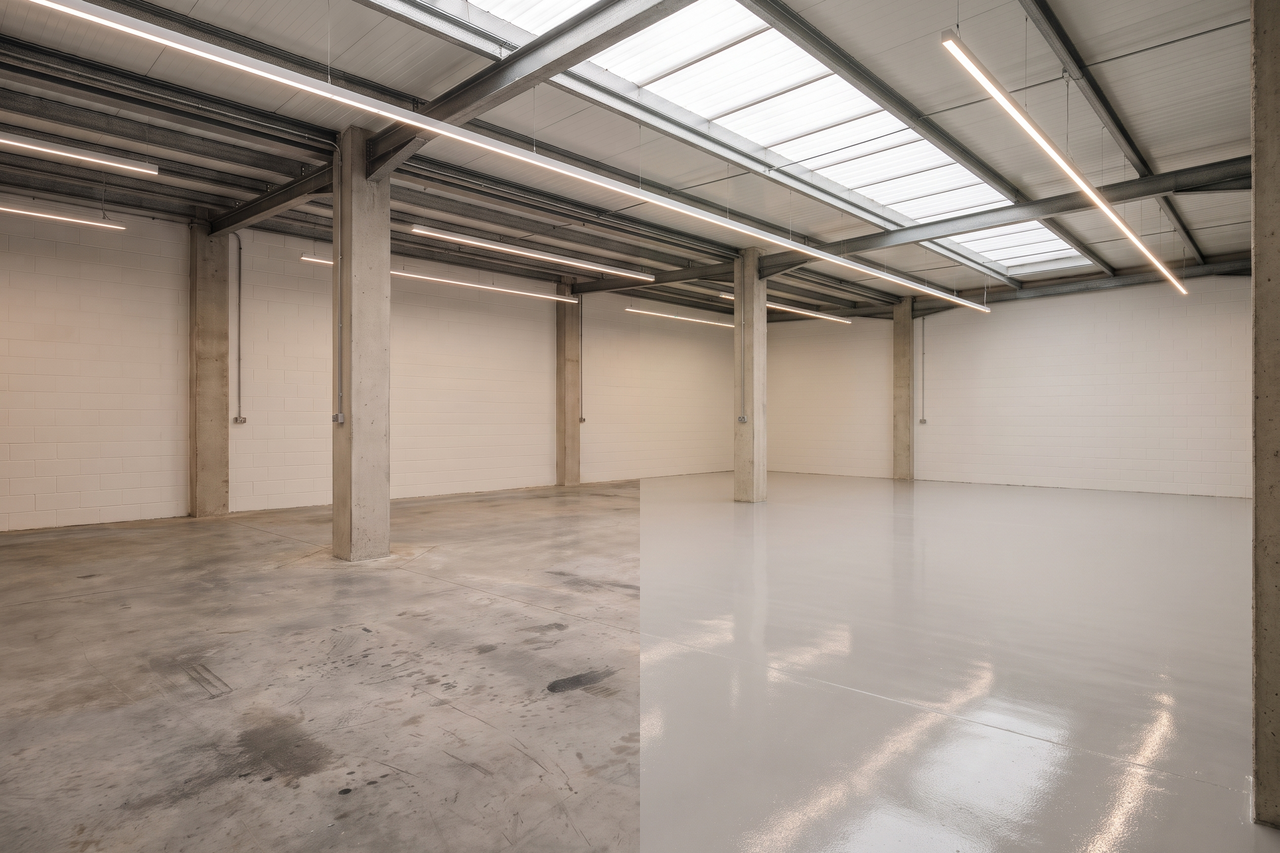
When the coating is suited to what the floor really faces, keeping it clean gets a lot easier. Spills sit on the sealed surface and can be dealt with using everyday products before they get into the concrete. Sweeping and mopping handle the bulk of the upkeep, and a sealed finish stands up to repeated washing better than unprotected concrete.
The coating also bounces more of the overhead light back into the room than bare slab does, so aisles and work zones can look brighter with the same fixtures. Safety striping, color-coded areas and directional markings can be built in where the chosen system supports them and your installer sees a good fit for how the space is laid out.
Pick a coating for the setting it lives in, and the floor stops being a maintenance headache and starts helping the business run.
What Does Commercial Epoxy Flooring Cost?
The price comes from the particulars: the square footage, the state of the slab, how much prep and crack repair it needs, the system the environment calls for and the finish you choose. Extra demands like stronger chemical resistance, more slip resistance or a specialty finish increase both the preparation and the material involved.
Whether the work can be phased in sections or fit around your operating schedule is something that depends on the project and the contractor involved. Mention it at the start, before the estimate takes shape.
Common Commercial Flooring Questions
Can the business stay open during a floor coating project?
That varies with the building and the scope of the project. Certain layouts allow one area to be coated while the rest of the floor stays in use, and others need everything cleared. Scheduling will depend on the project and the contractor; once the space has been seen in person, your installer can say what is realistic.
How much upkeep does a coated commercial floor take?
A good deal less than raw concrete. Spills rest on top and wipe up with standard cleaners before they can penetrate. Sweeping and mopping cover nearly all routine care, and the sealed surface handles frequent washing far better than exposed concrete used the same way.
Is epoxy tough enough for loaded carts and equipment?
That comes down to the coating and the kind of punishment your equipment dishes out. Some products are not meant to take steady abuse from loaded carts, pallet jacks, ride-on scrubbers or heavy mixed traffic. Before recommending a system, the flooring professional reviews what rolls across the floor, how heavy it is and how often it passes.
What decides which coating a commercial floor gets?
The process begins with how the floor is used. That covers the traffic and loads it carries, which cleaners and chemicals regularly reach the surface, how polished it needs to look and any access constraints on the work. Those details steer the recommendation.