
Industrial Epoxy Flooring
in Lebanon, MO
An industrial floor coating chosen for what your concrete actually faces on the job: the loads rolling across it, the fluids that land on it, and the cleaning routines and chemicals it meets as part of normal work.
Your Floor Takes the Abuse. Your Operation Shouldn't
Concrete in a working plant or warehouse carries a heavier burden than almost any other slab. Lift trucks and pallet jacks follow the same paths again and again, wearing down the same narrow bands of floor. Presses, racking and machinery push down on one spot without letup. Coolant, hydraulic oil and process fluids that get away from the line find their way into whatever bare concrete is nearby.
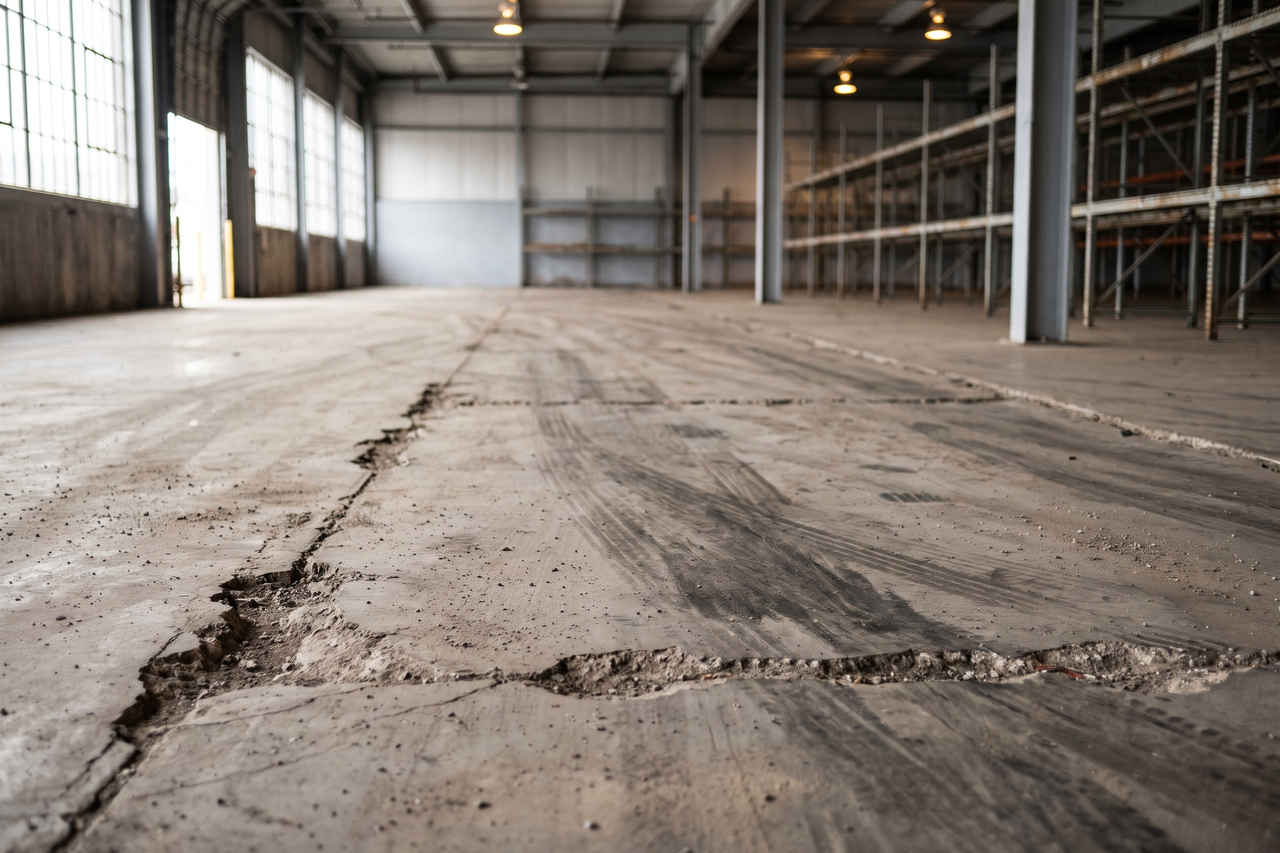
Uncoated concrete in a new building can look perfectly serviceable at the start. Use changes that. Wheels and steel casters scuff the top layer loose and send fine dust drifting over stock and equipment. The zones under the heaviest machines and along the busiest routes deteriorate first, and the wear creeps outward from there. Where spills happen routinely, stains sink in so deep that a scrubber barely touches them.
Sooner or later the floor becomes part of the workday. Drivers learn to slow down for rough patches and dips nobody accounted for. Cleaning takes more effort and shows less for it as the surface keeps opening up. And anyone walking through, from staff to customers to auditors, reads the floor as a measure of how the place is managed.
Your Facility Determines the Right Flooring System
No two industrial coating systems are quite alike. Coating thickness, how much weight a system tolerates, how it handles scuffing and spills, and the texture it leaves behind change from product to product. What works in one plant may be wrong for the next, and the way a slab looks at a first walk-through tells only part of the story.
That is why the flooring professional studies the whole operation, not just the concrete: which trucks and machines run on it, what chemicals reach the surface and how concentrated they are, the cleaning method and how often it happens, whether temperature shifts affect the slab, and where safety zones, striped aisles or textured finishes may need to be planned in.
Picture a cold-storage warehouse beside a machine shop running hot equipment and cutting fluids. Those floors face entirely different conditions. Vapor rising through the slab, temperature cycling, radiant heat and particular chemical exposures each change what a coating has to stand up to. Until those conditions are studied in person, picking a product for the floor is guesswork.
Built Around Your Facility. Not the Other Way Around
A sound industrial specification starts with learning how the building actually operates, ahead of picking any product or planning any work.
01
Evaluate the Facility
During a walk-through, the slab’s condition is recorded, the spots where machine and vehicle weight gathers are mapped, existing wear and damage are noted, and the surface preparation the project calls for is defined.
02
Build the Right Flooring Plan
Drawing on that review, your installer puts forward a system built around the facility’s actual operation, outlines prep and any repairs to the concrete, and walks you through the whole plan before work goes ahead.
03
Put Your Floor to Work
Application follows a sequence settled with the facility ahead of time, so everyone knows what to expect as the work moves forward. Scheduling and execution depend on the project and the contractor.
Need a Floor Built for a Tougher Environment?
To request an industrial flooring estimate, describe what the floor goes through in normal operation and what you hope the project fixes. Pictures of worn, cracked or damaged sections make the scope easier to gauge.
Floor Failure Creates Problems Beyond the Floor
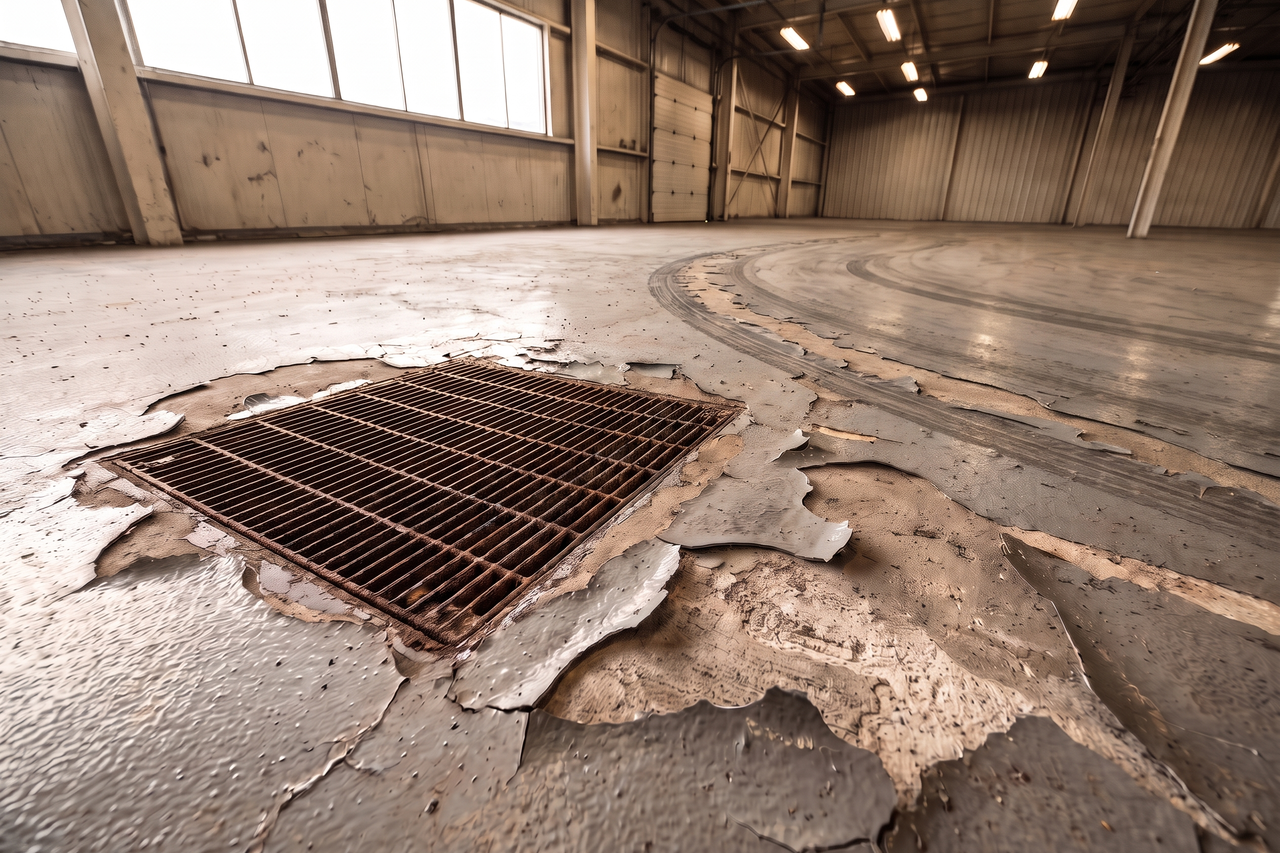
A coating that breaks loose from the slab seldom fails in just one spot. Flakes and chips scatter into travel lanes and collect around equipment, and what began as a floor problem starts slowing production. Parts of the floor nobody used to think about turn into obstacles the operation detours around.
Once a coating has failed, the exposed concrete is a harder recovery than a slab that began in fair condition. Constant use drives oil and grime deep into the exposed surface, and the damage gets tougher to manage as the uncovered area spreads.
Fixing a failed industrial floor usually turns into more work than anyone planned for. The space must be emptied and shut down, the loose coating stripped to bare concrete, and the concrete reground before the right system for the job gets a proper second chance. Doing it over often costs more than a carefully planned original installation.
A Floor That Keeps Up With Your Operation
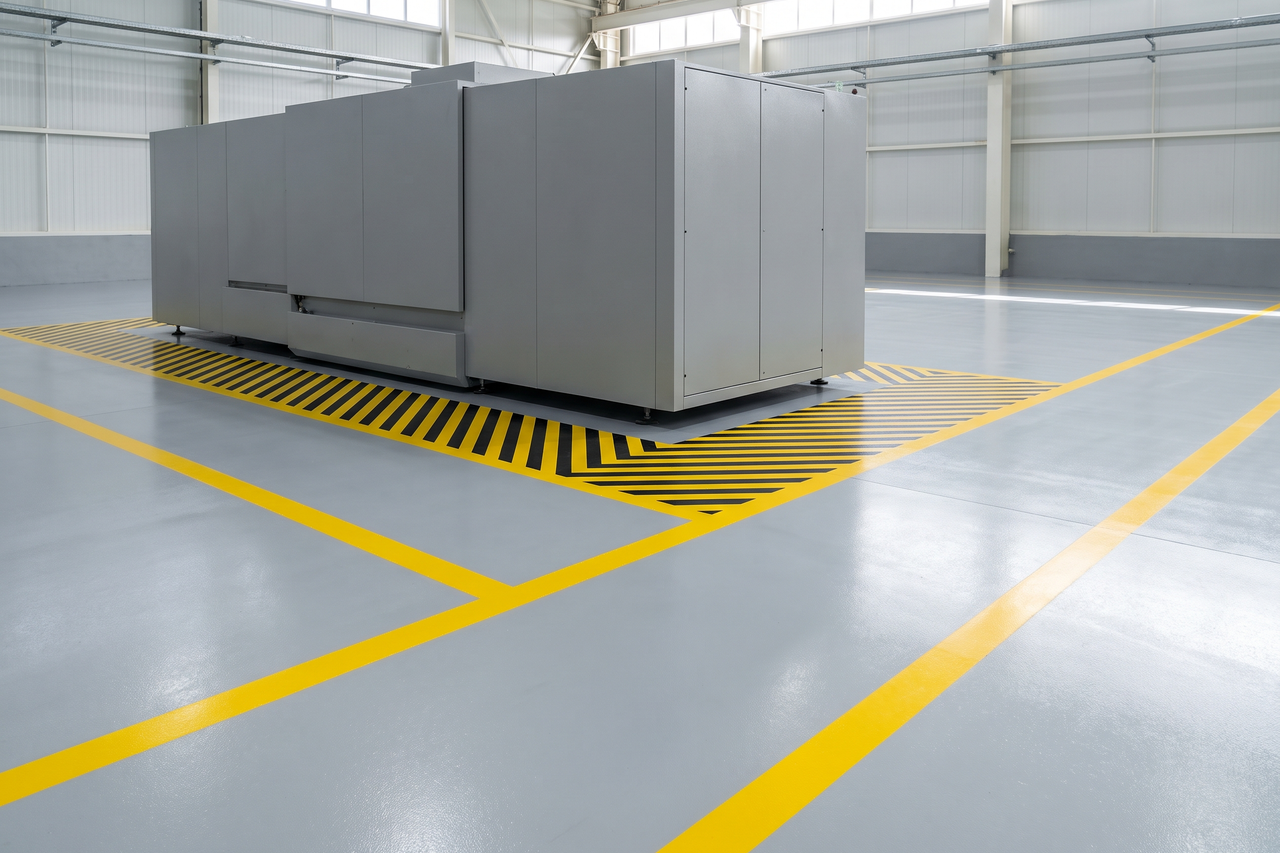
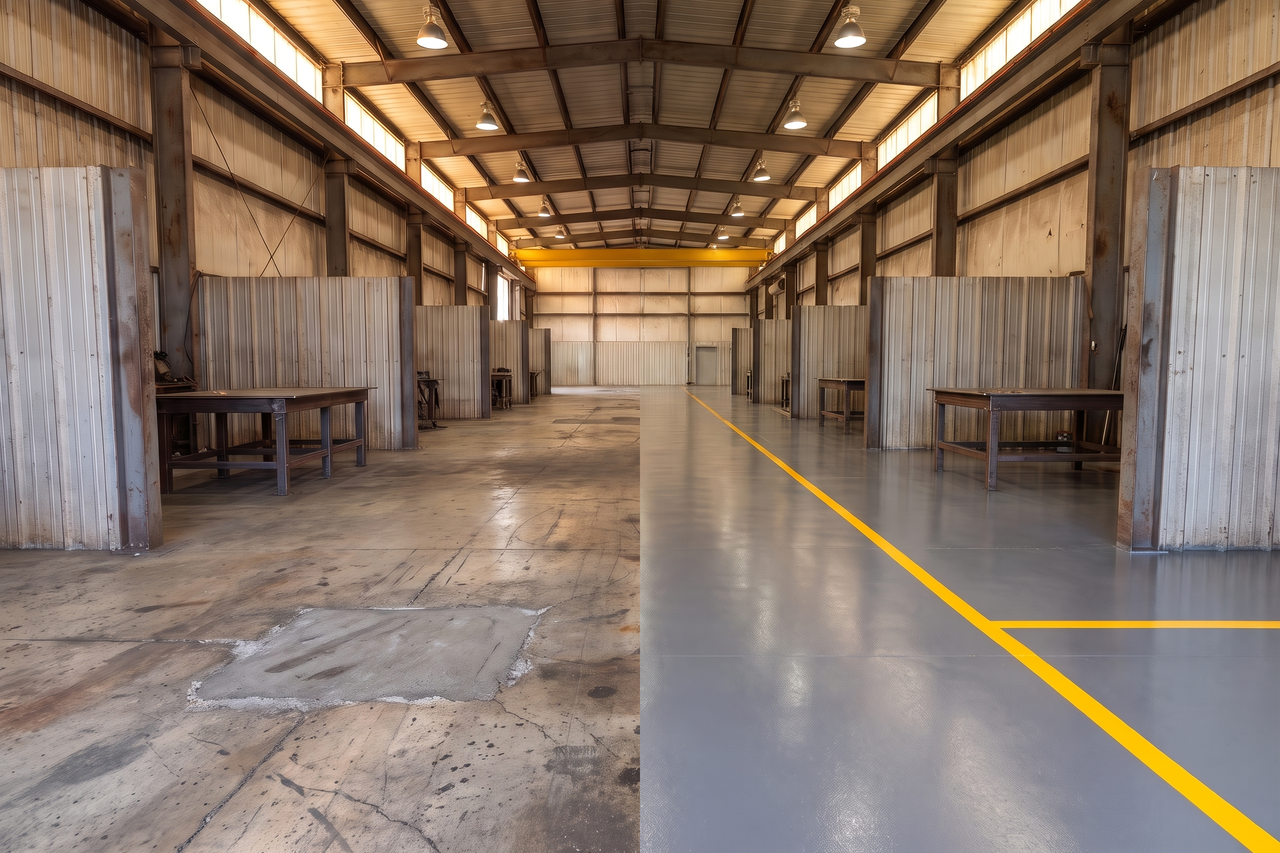
When the coating fits the facility, upkeep looks different. Traffic, washdowns and chemical contact now meet a surface picked for that job, rather than open concrete that soaks up whatever hits it. Cleaning crews get more out of their effort once the floor stops generating its own mess.
Sealing the slab cuts down dust compared with raw concrete, a plus wherever air quality and equipment maintenance are concerns. A coated floor also bounces more light back from the fixtures overhead, so work and storage areas look brighter with the same lighting in place.
Hazard zones, aisle lines, direction arrows and textured, slip-resistant areas can be designed into the specification, depending on what the chosen system allows and what your installer believes the facility requires. Planned around real workflows, the floor starts contributing to the operation rather than adding to the maintenance list.
What Does Industrial Epoxy Flooring Cost?
What an industrial floor costs comes down to the particulars: how much area is being coated, what shape the slab is in now, the amount of grinding and patching required, the build thickness and resistance ratings of the system, and whether the scope adds aisle lines or a gritted, slip-resistant finish.
Square footage on its own can’t support a trustworthy industrial price. Your installer looks at the concrete, sorts out what the operation demands and weighs the entire scope before a price is set.
Common Industrial Flooring Questions
Can epoxy take forklift traffic?
It comes down to the system and how your equipment uses the floor: the weight of each vehicle, the type of wheels and how heavily each route is traveled. Some formulations are made for constant powered-vehicle traffic; others aren’t suited to it. All of this is weighed on site by the flooring professional before a system is suggested.
How well do industrial coatings resist chemicals?
Chemical resistance differs widely between formulations, and a coating that tolerates one substance can break down under another. Pinning down exactly what lands on the floor, from lubricants and process fluids to strong cleaning agents, lets your installer judge a system against the actual conditions instead of a general exposure category.
Can aisle striping and safety markings be built into the floor?
In many cases, yes. Depending on the products and the layout, hazard zones, aisle lines, direction markings and slip-resistant textures can be incorporated into the system. Bringing them up at the start means they are designed into the specification rather than tacked on later.
What happens to normal operations during a coating project?
This depends on the project and the contractor. Relevant factors include the area being coated, the scale of prep and repair work, the system involved and whether work can be split into phases that let part of the building stay in use. Your installer goes over these points before the plan is set.